VIVAMA · Hong Kong buying guides
Red light and skincare: what the research does—and does not—show
Red and near-infrared light have been studied for changes in skin appearance. The evidence is specific to the device and protocol tested. It is useful context for buying decisions, not a promise that every home device produces the same results.
By VIVAMA editorial · 13 October 2026
What completed studies have investigated
A 2007 randomized, placebo-controlled split-face study of 76 participants examined 633 nm and 830 nm LED settings and reported improvements in measured wrinkle and elasticity outcomes. A 2025 sham-controlled study of 60 participants examined a particular 630 nm/850 nm home-use mask over 16 weeks and reported differences in crow’s-feet assessments. These studies tested their own devices and protocols, not VIVAMA panels.
Why a timeline is not a guarantee
Study duration, dose, treatment frequency, comparison group and outcome measurement all matter. Results from a specific trial cannot establish a universal number of weeks for your own device or skin. Consistent use should follow the model-specific manual rather than a study protocol for another device.
What evidence is available for VIVAMA
The public catalogue and device manual describe panel dimensions, controls and programmes. The studies cited here are background research; this page does not present a VIVAMA clinical trial.
Keep the routine grounded
Check the manual for positioning and eye protection. If you have a medical condition, use photosensitising medication or are uncertain about suitability, ask a qualified healthcare professional before use. A wellness device should not replace medical assessment.
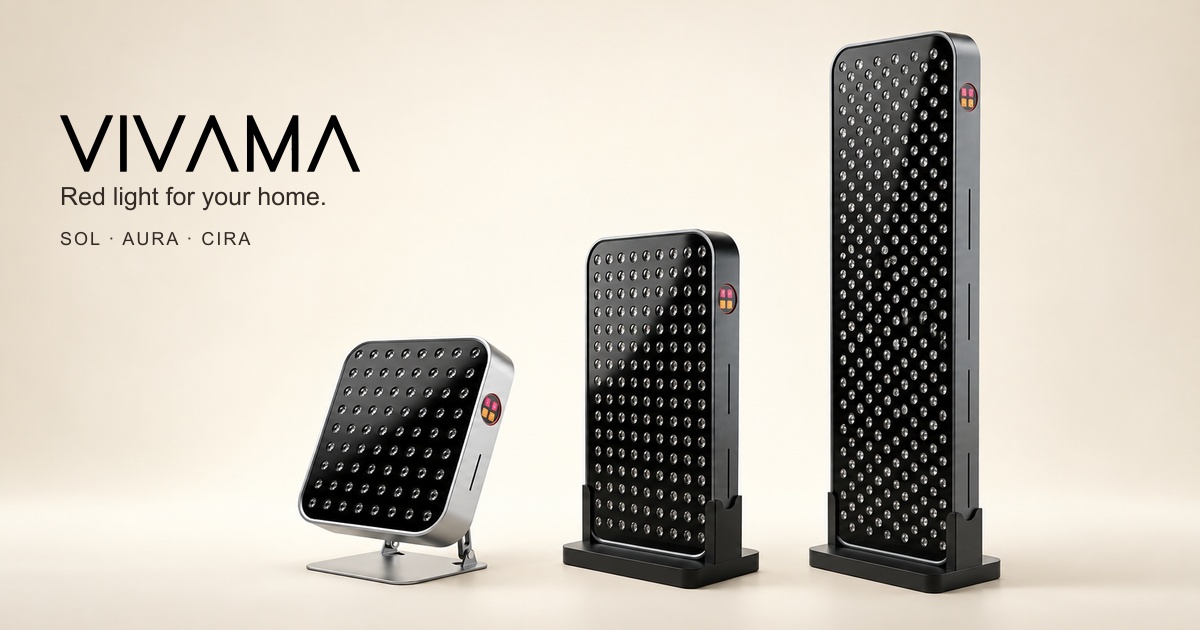
Compare VIVAMA panels
| Model | Panel dimensions | LED | Product details |
|---|---|---|---|
| AURA | 530 × 300 × 60 mm | 144 | Current product details |
| SOL | 300 × 290 × 60 mm | 72 | Current product details |
| CIRA | 1010 × 300 × 60 mm | 288 | Current product details |